Pyrite's captivating cubic crystals form through a complex chemical dance between iron and sulfur in oxygen-starved environments, creating Earth's notorious "fool's gold" that frequently astounds collectors with its metallic luster and unexpected geometric precision; this deceptive mineral often preserves geological history through unique growth patterns found in sedimentary beds and hydrothermal vents.
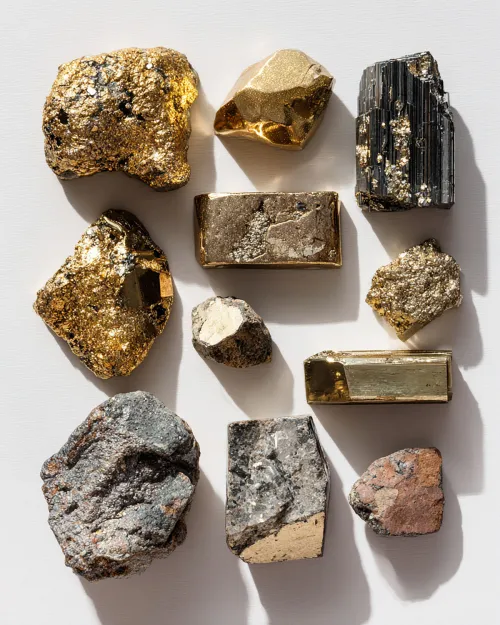
When your hiking boot unexpectedly scrapes against a brassy metallic gleam in a rock face, that heartbeat-skip moment of "Could it be gold?" is nearly universal. By day's end, you'll likely learn it's pyrite - but perhaps the real treasure lies beyond that initial disappointment. That glittering mineral holds a hidden geological drama millions of years in the making. This exploration unpacks precisely how Earth constructs these deceptive crystals: We'll examine pyrite's chemical birth in hostile environments, decode its telltale physical signatures to avoid costly misidentifications, map its preferred formation habitats from coal seams to volcanic vents, develop hands-on methods to grade specimens like museum curators, and finally investigate the most bizarre exceptions where pyrite defies all standard rules. Understanding this journey transforms simple rock hunting into a form of geological archaeology.
The mineral's chemical origins in low-oxygen environments
Identification strategies for distinguishing authentic specimens
Primary geological settings where these formations emerge
Evaluation metrics for collector-grade samples
Curious formation anomalies that challenge rules
Picture an aquatic environment where oxygen vanishes completely - perhaps deep marine sediments or the crevices of a hydrothermal vent. Here, sulfate-reducing bacteria begin dismantling sulfur compounds, initiating pyrite's molecular construction. The mineral's seemingly instantaneous sparkle in your palm came from painstakingly slow crystallization that may have spanned eons. Recognizing these mechanics matters because they reveal why certain rock layers become pyrite nurseries while others remain barren.
In these reducing environments, dissolved iron encounters hydrogen sulfide, triggering reactions that build crystalline lattice frameworks atom by atom. You might notice unusually heavy stones during fieldwork since pyrite's density results directly from its iron content. Temperature fluctuations during formation can yield fascinating geometric variations - while standard conditions produce textbook cubes, cooler environments may craft those rare and beloved pyritohedron shapes with twelve pentagonal faces. Crystal imperfections often manifest as striations visible under magnification, recording temperature shifts like geological tree rings.
Atomic Symmetry Patterns
Examine angular relationships with a simple protractor; authentic pyrite forms near-perfect 90-degree junctions between faces. Distortions become visible evidence of ancient disruptions during crystallization that collectors can read like geological text.
Conduct amateur spectroscopy: Certain pyrite varieties incorporate microscopic impurities like arsenic during formation. These additions aren't flaws but chronicles of mineral evolution that may manifest as subtle red tints or distinctive UV fluorescence your field kit can detect.
When examining a cliffside or stream bed, certain rock strata whisper higher probability for pyrite encounters. Coal seams often cradle pyrite concretions where decayed organic material supplied essential sulfur compounds, while black shale beds preserve these minerals like geological time capsules. Knowing these contexts proves invaluable whether scouting mining regions or evaluating specimen authenticity.
Volcanic environments present particularly fascinating pyrite factories: Hydrothermal vents pumping mineral-rich fluids create sudden crystallization events that capture geological microseconds in crystalline form. Here you'll tend to find clusters with remarkable geometric precision. Conversely, sedimentary pyrite formations develop through languid precipitation where minerals gradually embrace a central nucleus. Organic-rich muds occasionally gift us framboidal pyrite - micro-spheres resembling raspberries under magnification. For field identification, examine how crystals integrate with host rock; geological weathering patterns vary distinctly between these formation environments.
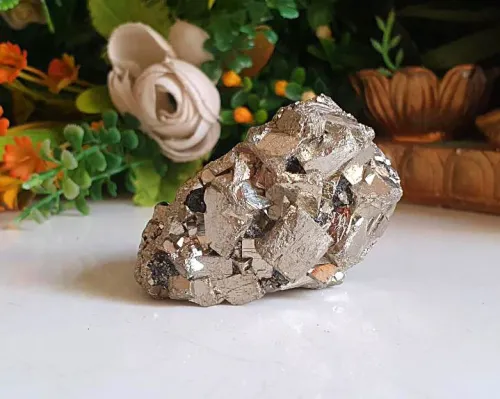
Distinguishing pyrite requires moving beyond superficial gold comparisons toward systematic observation. That bronze-toned metallic shine in your specimen might give immediate excitement, but wait - pyrite behaves differently under sunlight than its precious lookalike. These distinctions become critical when evaluating raw samples at mineral shows or online listings where misidentifications cost collectors hundreds annually.
Conduct three definitive assessments before declaring a find: First, scratch testing reveals pyrite's 6-6.5 hardness where a steel knife won't mark intact surfaces like softer materials. Second, observe streak colors; rub the mineral against unglazed ceramic to expose the dark greenish-black signature pyrite leaves versus gold's buttery streak. Third, examine crystal structure; angular formations with geometric precision indicate natural pyrite versus gold's typically globular habit. Surface textures offer additional clues: authentic specimens may display oxidation spots resembling copper rust - a natural chemical consequence absent in manufactured fakes.
Matrix Integration Levels
Inspect specimen edges where crystals meet host rock; genuine formations show gradual mineral transitions, whereas glued composites exhibit sharp boundaries that look surgically precise under a loupe.
Position samples near a window: Pyrite reflects light differently than gold, with slightly cooler undertones and less intense reflectivity. Artificially enhanced specimens often display unnaturally brilliant sparkle - Earth rarely produces that degree of optical perfection.
Holding that promising cubic cluster doesn't complete your evaluation journey - even authentic pyrite carries quality tiers that impact scientific and collector value. Professionals assess five key characteristics, transforming your perspective from amateur rock enthusiast to discerning mineral analyst.
Crystalline integrity stands paramount: Specimens exhibiting undamaged natural terminations command premium consideration while cut faces diminish scientific value. Surface preservation tells equally important stories - specimens showcasing oxidation spots imply advanced aging where sulfur might migrate toward crystal surfaces. Consider formation environment as a valuation component: Hydrothermal pyrites often demonstrate superior crystalline definition compared to sedimentary cousins. When evaluating matrix-bound specimens, test adhesion subtly; authentic rocks preserve geological "root systems" rather than appearing glued. A final UV light test may reveal fascinating fluorescence variations indicating trace elements that could significantly increase mineralogical worth.
Minimal Oxidation Presence
Inspect crystal faces under magnification; reddish-brown tarnish signals degradation onset that may worsen. Specimens lacking oxidation demonstrate environmental stability worth prioritizing.
Authentic matrix integration contributes significantly to specimen storytelling and value stability whereas detached crystals lose vital geological context that museums and scientists cherish.
Just when mineralogists develop pyrite expectations, exceptional specimens shatter conventional rules with spectacular defiance. The most legendary outliers include Ohio's famed "pyrite suns" - radial discs forming exclusively in specific coal seams under mysterious pressure combinations never replicated in labs. Fossilized remains present another wonder: Pyrite occasionally replaces organic structures molecule-by-molecule in processes called permineralization, creating glittering ammonites and trilobites challenging everything we know about crystallization timelines.
In certain coal beds, spherical pyrite formations called framboids occur - microscopic structures resembling raspberries that accumulate through rapid crystallization impossible under standard models. Coastal formations introduce their own oddities where seawater chemistry creates uniquely distorted crystalline architectures through halogen interactions. These anomalies aren't merely curiosities; they hold keys to exceptional geological moments we haven't begun to fully comprehend. Their existence reminds geologists that pyrite's story still contains undiscovered chapters.
Next time unearthing metallic glimmers during field work, allow these insights to guide your approach: Focus first on contextual rock relationships before examining individual crystals, remember that specimen imperfections often carry more scientific worth than flawless presentations, and whenever encountering unexpected formations, document conditions meticulously - you might hold a geological exception challenging modern mineralogy. Keep that small ceramic tile handy for decisive streak testing; 30 seconds of rigorous validation prevents misjudgments haunting collections for decades.
What determines pyrite's cubic rather than rounded shape?
The mineral's isometric crystal system inherently favors angular configurations. Molecular arrangement patterns create symmetric growth vectors that typically manifest as sharp-edged structures rather than rounded masses under stable conditions.
How quickly might oxidation affect unprotected specimens?
Surface tarnish tends to develop gradually over years, though humidity exposure could potentially accelerate reactions. Maintaining stable storage conditions helps preserve specimens significantly longer than uncontrolled displays.
Could volcanic activity disrupt established pyrite deposits?
Intense heat and chemical shifts may decompose pyrite into secondary minerals like hematite, though hydrothermal flows might simultaneously create new formations nearby, demonstrating geology's constant balancing between destruction and creation.


$
