Significant pyrite formations occur worldwide across distinct geological terrains, with high-density deposits concentrated along tectonic boundaries like Spain's Iberian Belt, volcanic systems such as Canada's Bathurst Camp, and sedimentary basins like the Appalachian coal regions. Regional formations dictate crystal characteristics - cubic structures prevail in Spanish deposits, while Peruvian specimens display dendritic patterns - crucial knowledge for industrial sourcing and specimen verification.
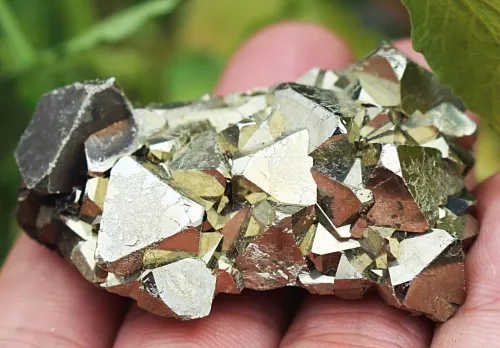
You've probably held a golden cube of pyrite wondering about its journey - maybe debating if Spanish pyrite deserves its fame or questioning how Peruvian dendrites form. Whether sourcing for commercial applications or analyzing specimens, understanding geographical distribution can indicate sulfur content, predict crystal patterns, and reveal preservation challenges. We'll navigate through tectonic shifts that birthed European pyrite belts and volcanic activity that shaped New World deposits, exploring how location defines both scientific significance and practical value.
Understanding regional concentration lets mineral buyers target optimal sources while helping enthusiasts predict specimen authenticity. Geological records show pyrite formation requires specific iron-sulfur balances.
The Iberian Pyrite Belt spanning Spain and Portugal represents approximately 80% of Europe's massive sulfide reserves. These sedimentary deposits typically form through submarine hydrothermal processes, resulting in textbook cubic crystals favored by collectors. Meanwhile, Appalachian pyrite develops through bacterial sulfate reduction in coal seams, which can manifest in framboidal structures. You'll notice Canadian VHMS deposits, like those around Bathurst, contain massive pyrite concentrations formed through seafloor volcanic activity - these frequently showcase mineral associations with economic metals.
Formation environments directly influence commercial viability and collector appeal. Regional mineral associations often serve as formation indicators.
When hydrothermal solutions in Romania's Baia Mare region cooled, they created gold-included specimens coveted by museums. High-temperature volcanic systems produce distinct crystallization: Italian pyrite shows octahedral tendencies due to rapid cooling environments, whereas Peruvian stalactitic forms emerge when solutions slowly evaporate. Spanish sedimentary systems allow textbook cubic crystallization due to stable conditions. If assessing specimen origins, check mineral associates - quartz pairing suggests volcanic origins, while coal matrix indicates sedimentary formation.
Pyrite from VHMS deposits like those in Indonesia typically has minor copper inclusions visible under microscopy. Notice how Canadian specimens often have characteristic striation patterns indicating rapid mineralization.
Coal-associated pyrite frequently exhibits oxidation halos around crystals. When handling Appalachian samples, test nearby soil with pH strips as acidic runoff may indicate ongoing pyrite decomposition.
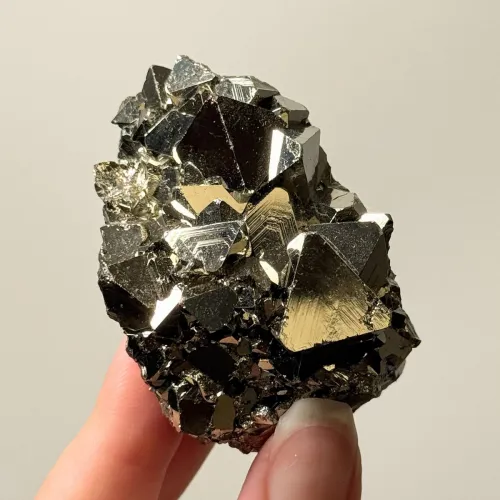
Location determines functional properties: industrial processors require consistent sulfur content while collectors pursue unique aesthetic qualities. Regional extraction ethics increasingly influence sourcing.
The Iberian Belt's sedimentary deposits provide reliable material with 53%+ sulfur content essential for sulfuric acid production - when bulk sourcing, request spectral analysis certificates matching this benchmark. For collectors, Navajún's Spanish mines offer ethical extraction and museum-grade cubes. Notice Peruvian specimens tend to be lighter than Spanish counterparts due to crystalline porosity; if checking density, compare heft against known quartz samples using portable balances. Brazilian and Mexican deposits sometimes display colorful tarnish layers caused by weathering.
Regional verification starts with surface textures: Spanish specimens maintain sharp edges while transported stones show micro-fractures. Try the resonance test - gently tap stones listening for high-pitch metallic vibrations to confirm density.
Russian pyrite's metallic luster often photographs silver under artificial light. Natural lighting gives accurate tonal representation when documenting collections.
Apply tectonic understanding when prospecting new areas or verifying specimen origins. Mineralogical details collectively build location profiles beyond mere geography.
Correlate geological timelines with regional signatures: Jurassic-era deposits often contain marine fossils locked in matrix while Paleozoic formations exhibit intense metamorphism. When exploring potential sites, identify convergent boundaries historically associated with mineralization. Test soil acidity near sedimentary basins - unexpectedly low pH may suggest hidden pyrite layers decomposing below. For new collectors, concentrate on ethically sourced Spanish cubes before exploring complex Peruvian structures. Remember that identical formations might appear across continents where similar tectonic histories repeated through geological time.
Spanish pyrite formations yield geometric cubes ideal for academic study, with Navajún's mines providing the most consistently cubic specimens globally. Oxidation halos appear as rainbow patinas near surface layers.
Peruvian systems create dendritic patterns unique to slow sedimentary precipitation. Stalactitic specimens feel unexpectedly lightweight due to micro-porosity - balance-scale comparisons expose this immediately.
Italian volcanic pyrite forms octahedral crystals rather than cubes due to rapid cooling differences. Unlike Spanish types, their metallic luster photographs well under polarized light.
Build location awareness step-by-step: begin with basic visual comparisons before advancing to chemical testing. Cross-reference geological maps with mineral dealers’ provenance claims.
Spanish vs Peruvian differences: While Spain produces textbook cubes, Peru's sedimentary beds form intricate dendritic patterns. Spanish specimens maintain sharper crystal edges due to gentler formation conditions.
Gold association patterns: Chile's Atacama deposits occasionally contain trace gold inclusions similar to Romanian specimens, though gold rarely occurs as visible particles.
Photography challenges: Smartphones may misinterpret Russian pyrite's luster - diffused natural lighting captures true coloration more reliably than studio setups.
Oxidation layers: Some Mexican deposits exhibit turquoise coatings created through secondary mineral formation during chemical weathering.


$
