Pyrite produces a greenish-black to dark grayish-black streak when scratched on an unglazed porcelain plate, distinct from its metallic gold surface appearance. This fundamental identifier helps distinguish it from actual gold, which leaves a golden-yellow streak. Streak consistency originates from pyrite's sulfur-rich composition reacting during abrasion, with test reliability requiring specific porcelain hardness (~7 Mohs).
You're kneeling at a rocky outcrop, sunlight catching a metallic glimmer that quickens your pulse. Could it be gold? Veteran rockhounds know surfaces lie—pyrite notoriously mimics precious metal, earning its "fool’s gold" moniker. This moment of uncertainty is where the streak test becomes your trusted translator. This guide unpacks pyrite's streak color through geological evidence and practical insights, revealing why a simple porcelain plate helps solve mineral identity crises. We’ll explore how sulfur chemistry manifests as dark streaks, contrast pyrite with close look-alikes, and share techniques collectors and geologists employ for confident field verification.
When visual traits alone create confusion between pyrite and gold—or deceptive minerals like chalcopyrite—mineralogists rely on streak testing as a first defense. Streak strips away surface illusions to reveal inherent composition. A porcelain plate acts as a chemical canvas: the mineral scraped against it leaves a powdered residue reflecting its true nature.
Unlike pyrite’s metallic sheen, its streak appears distinctly non-metallic and often manifests as green-black or gray-black, key indicators visible even with amateur tools. According to mineral identification protocols, the test’s accuracy depends on plate characteristics. Unglazed ceramic with roughness matching ~7 Mohs hardness proves optimal—smooth surfaces lead to unreliable outcomes. Crucially, variations like faint greenish hints can trace to regional impurities (arsenic/cobalt), yet streak color consistency holds across pyrite’s cubic or pyritohedral formations.
When pyrite abrades against porcelain, sulfur bonds fracture. This releases fine particles that oxidize upon air exposure. Unlike the mineral's reflective surface, powdered sulfides scatter light, yielding darker tones. High sulfur concentration underpins pyrite's characteristic streak, while minor elements might tint residue green.
Pyrite's cubic crystalline lattice breaks unevenly during scratching. Cleavage directs how powder adheres—fine debris clumping suggests internal impurities or weathering. Noticeable pressure needed to create residue can signal crystallinity variations unnoticed externally.
Laboratory analysis confirms streak origins. XRD studies reveal dark powders contain complex iron sulfides created through grinding friction. Interestingly, freshly exposed streaks may appear greener before oxidizing to deeper black—one reason immediate documentation proves valuable in fieldwork.
Imagine prospecting under harsh desert light. You unearth a brassy specimen. Streak testing provides rapid, equipment-light confirmation:
Geologists also document scratch resistance and powder behavior. Does debris smear uniformly or streak irregularly? Consistent spreading often correlates with unweathered samples. Crucially, a black streak against metallic luster reliably signals pyrite—not gold’s golden trace.
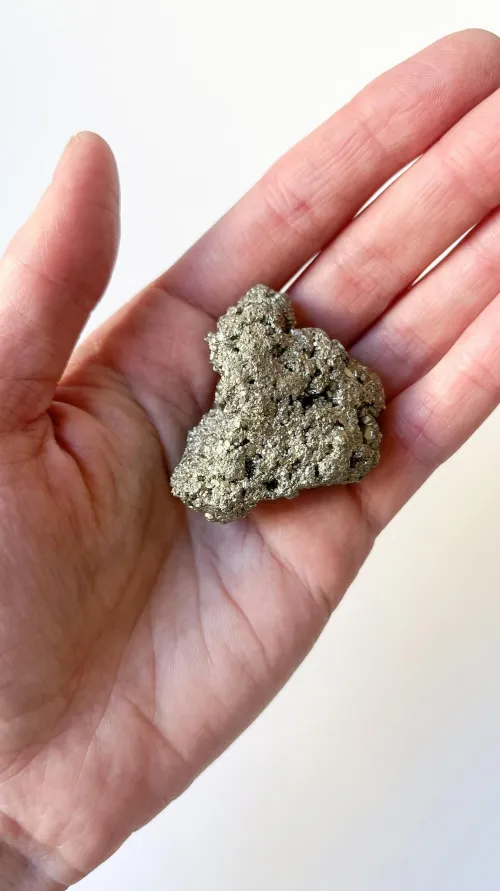
Mineral collectors frequently encounter treated or mislabelled specimens. Accurate streak testing prevents costly misidentifications. Always test sample edges discreetly:
Dealers validate pyrite batches through spatial testing. Specimens from Peru, Spain, or U.S. sources may show subtle streak differences based on trace elements, though sulfur dominance maintains core dark appearance. Weathered samples often streak identically to fresh ones if tested beneath oxidized rinds.
Pyrite’s streak offers more than identification; it provides environmental context. In sedimentary rock analysis, streak darkness may correlate with oxygen levels during mineral formation. Coal-associated pyrite tends toward denser blacks hinting at anaerobic swamp origins. When prospecting:
Unlike economic indicators like gold content, streak alone won’t predict pyrite’s value for acid production or jewelry. But it helps reconstruct ore genesis—a black streak in quartz bands could guide exploration toward precious metal deposition zones nearby.
The key to mastering pyrite verification lies in practiced observation. Keep these takeaways accessible during your mineral adventures:
Q: Can pyrite occasionally leave a golden streak?
A: Genuine pyrite typically does not produce gold streaks. Surface tarnishes or composite samples might initially confuse, but retesting reveals characteristic green-black traces.
Q: How reliable is streak testing versus lab analysis?
A: Streak offers preliminary accuracy when paired with contextual clues like hardness. Laboratory XRD/assay confirmation proves essential for commercial or legal identification.
Q: Why isn’t pyrite’s streak gold like its surface?
A: Surface shine involves light reflection off intact crystal faces. Streaking fractures minerals, exposing chemical properties like sulfur concentration that manifest as dark residue.
Q: Does weathered pyrite yield matching streak colors?
A: Typically yes—test inner, unoxidized material beneath surface weathering since oxidization rinds may alter characteristics.
Q: How differ pyrite’s streak from marcasite?
A: Both exhibit dark streaks, but marcasite more commonly shows grayish-brown traces under controlled conditions alongside distinct lower stability.


$
