Pure crystalline pyrite does not stick to a magnet at room temperature due to its non-ferromagnetic atomic structure, though trace impurities might cause weak attraction in rare cases. Focus on key identification methods like streak tests or weight comparisons to avoid confusion with magnetic minerals like magnetite.
Picture yourself in a rock-strewn field, a rusty magnet in hand and eager to spot that gleaming "fool's gold." You've heard mixed tales: some say it sticks to magnets, others swear it doesn't. As a curious mind, you're caught between doubt and discovery. Today, we'll unpack that confusion step-by-step in this myth-busting exploration. Rather than dry lists, we'll use real prospecting scenarios and visual cues to explain why pyrite behaves as it does. By the end, you'll have clear, field-tested strategies to confidently differentiate pyrite from its magnetic lookalikes in your collecting or purchasing adventures.
Is pyrite naturally non-magnetic due to its atomic makeup?
How does field observation reveal magnetic illusions?
Why does confusing pyrite with magnetite often lead to errors?
What practical tests provide reliable mineral verification?
The thing is, many beginners mistakenly believe all iron-rich minerals stick to a magnet, causing costly identification errors during collecting trips or purchases. Imagine picking specimens for your display case, only to realize later that some were mislabeled—pyrite's weak magnetic pull might be misinterpreted as genuine attraction. This matters because false assumptions can waste time and resources; we'll clarify how to spot misleading signals right from the start.
First, recognize that pure pyrite remains non-magnetic naturally. Its cubic crystal lattice positions iron atoms in ways that cancel magnetic domains effectively, a fact validated by electron spin resonance studies. When testing, always bring a neodymium magnet: authentic pyrite crystal samples typically show no reaction, while inconsistent spots could imply impurities like magnetite fragments embedded within the rock.
You might wonder how a mineral containing iron could resist magnetic pull, particularly when studying specimens under a magnifier during geology classes or home labs. This angle matters for deeper learning: by grasping pyrite’s inner architecture, you gain insight into why it differs from other iron ores and avoids magnetic attraction at everyday temperatures.
Let's start with its crystal structure: pyrite forms distinct cubes with atoms arranged diagonally, neutralizing magnetic fields. Compare this to magnetite, where iron's magnetic properties prevail due to different atomic alignments. Crucially, paramagnetism studies show pyrite’s magnetism only activates at cryogenic conditions—well below freezing—meaning your room-temperature tests won't yield attraction. As you observe specimens, look for consistent geometric patterns under magnification; this visual cue reinforces why pyrite feels unexpectedly light compared to magnetic alternatives.
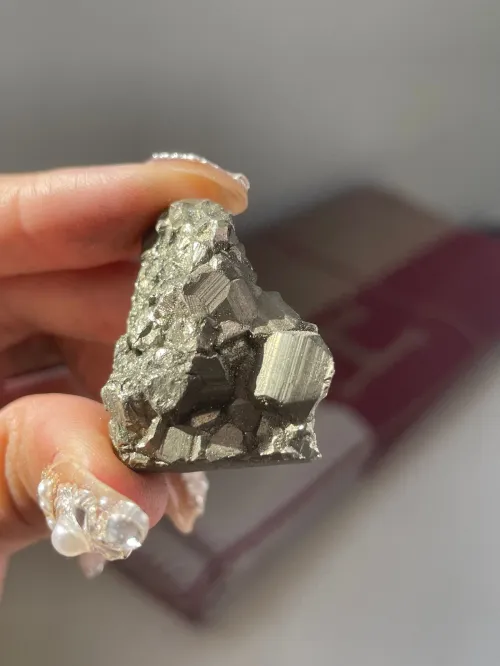
Notice sparks flying while hammering a specimen near a creek—this sensory clue becomes vital when you're in remote locations without fancy tools. Prospectors face real-time dilemmas: relying solely on magnetism could mislead you if pyrite contains trace inclusions, risking mistaking it for valuable gold during an exploration hike.
For reliable field identification, carry streak plates and observe reactions. Pyrite tends to produce a distinctive sulfur dioxide smell and dark greenish-black streaks when scratched on unglazed porcelain. Pay attention to surface oxidation effects too: after prolonged air exposure, iridescent blues appear but won't enhance magnetism. Focus on a multi-step approach instead of single tests. How do you refine your technique?
Begin with weight heft by comparing specimens—pyrite’s density ranges around 4.8–5 g/cm³, making it lighter than gold or magnetite. This difference can be felt even by hand in side-by-side checks.
Test hardness and luster: pyrite ranks 6–6.5 on the Mohs scale, harder than softer materials that scratch easily. Fresh surfaces show brassy metallic shine, unlike gold’s smoother appearance.
Quick verification signals while outdoors:
You’re browsing a mineral show, and a vendor claims pyrite attracts magnets—hold that purchase! Misconceptions can inflate costs or damage specimens when storing them improperly for displays. Why worry? Confusing pyrite with magnetite might lead to acidic degradation issues, ruining collections over time. This section anchors you firmly in reality.
Store pyrite away from humidity as its sulfur content may trigger corrosion, a practical storage tip to preserve specimens. Emphasize re-testing magnetic responses annually if impurities were initially noted; localized attraction doesn't spread but shifts subtly. Importantly, always use additional verification tools like streak tests upfront—when magnetism seems ambiguous, this can confirm identity through distinct powder residue.
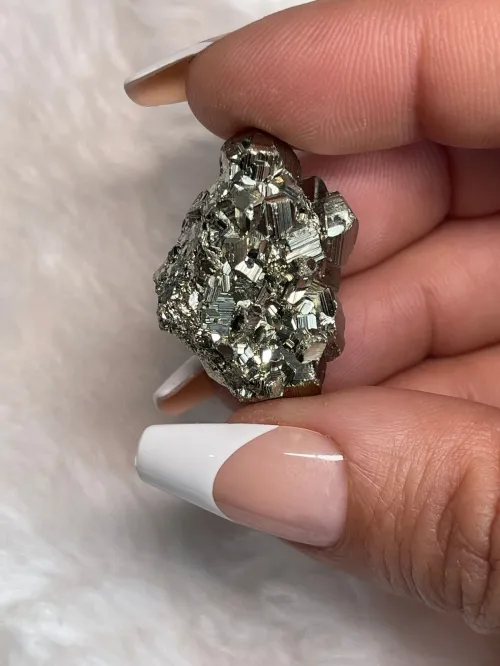
Set up specimens side by side on your workbench—perhaps a magnetite sample and a pyrite cube—to notice subtle contrasts buyers often miss in haste. Comparative scrutiny matters most when evaluating deals: pyrite’s paler luster and weight differences become obvious upon close inspection.
Imagine comparing density measurements: magnetite, while magnetic, typically weighs less than pyrite at about 5.2 g/cm³ versus pyrite’s 4.8–5 range. Crystal forms also diverge—pyrite favors cubes, whereas magnetite might show octahedrons under your loupe. Focus on visual cues like streak color: magnetite yields black trails to pyrite’s greenish-black. If magnetism tricks you, reassess with a simple hardness scratch test against calibration tools.
Now, recall that pyrite crystal you examined earlier—how can you lock in these insights? Let's reframe key decision tips into a handy mini-checklist: verify tests with strong magnets if attraction arises, pair streak analyses for backup confirmation, and always prioritize well-formed specimens for accurate identification. Try this today: arrange your mineral samples and lead a friend through the spark test, noting sensory differences together. Remember, consistency in field methods builds confidence and sharpens your prospecting eye over time.
Q: Will pure iron pyrite ever stick to a refrigerator magnet?
A: At room temperatures, pure pyrite won't stick—its atomic structure prevents ferromagnetic behavior. Only cryogenic conditions can potentially induce minimal attraction, not typical household magnets.
Q: How do nickel impurities affect pyrite's magnetic properties?
A: Trace nickel might create localized magnetic spots, but this tends to be inconsistent and detectable only under controlled tests with neodymium magnets.
Q: Is magnetic attraction a reliable way to distinguish pyrite from chalcopyrite?
A: Not alone—both may show weak responses. Combine magnetism observations with hardness or luster checks for clearer identification.
Q: Why do some pyrite samples weakly attract magnets while others don't?
A: This variability typically stems from minor magnetite inclusions; test multiple fragments from the same sample to identify impurity concentrations accurately.


$
