Pyrite, often called fool's gold, does undergo oxidation when exposed to oxygen and moisture. This natural chemical process may create sulfuric acid and iron oxides, causing visible tarnishing from metallic yellow to dull brown. While it poses risks for collectors and construction projects, oxidation can often be managed through proper storage and moisture control.
Picture inheriting a lustrous pyrite specimen that gradually develops crusty reddish patches within months. Or consider a building developer discovering concrete foundations cracking unexpectedly after rainy seasons. These scenarios trace back to pyrite oxidation – a phenomenon collectors fear and builders monitor carefully. This guide unpacks how the mineral reacts, why it matters across different contexts, and how you might identify the subtle signs before significant changes occur. We'll bridge mineral science with practical observation, showing how oxidation mechanisms affect jewelry integrity, property stability, and environmental health.
• Understand the chemical dance between pyrite, oxygen and humidity
• Spot visual clues indicating various stages of material breakdown
• Implement preventive measures for collections and construction
• Distinguish natural pyrite changes from similar minerals
• Analyze ecosystem impacts around mining sites
When handling this curious mineral, you might wonder why some specimens stay pristine for decades while others crumble within seasons. The answer lies in its iron sulfide composition that reacts chemically when exposed. This section explains the fundamental reactions that explain both stability and decay, whether you're evaluating specimens on a collector's shelf or rocks in construction aggregates.
The oxidation process begins with moisture penetrating the crystal structure, allowing atmospheric oxygen to react with the iron sulfides. This chain reaction tends to produce sulfuric acid and iron oxides – compounds that gradually alter the mineral's surface and volume. Pyrite in fine-grained forms or fractured pieces oxidizes faster than solid crystals because more surface area is exposed. While stable under desert-like conditions, accelerated changes can occur when humidity levels consistently exceed 55-60% or when particles are compacted with little air circulation.
For collectors and appraisal specialists, recognizing early-stage oxidation preserves specimen value and prevents spread. Imagine selecting minerals at a gem show: subtle signals can help differentiate a stable piece from one that might cause headaches later. This section highlights observable patterns you might look for during inspections across different stages of transformation.
The initial metallic shine typically dims to a steely gray patina within months of exposure. While visual changes depend heavily on environmental conditions, these observable signs tend to emerge sequentially:
Notice loss of reflective brilliance before color changes become obvious. Surface dullness often serves as the first clue, especially along crystal edges and facets where reaction initiates under magnification.
Reddish-brown streaks or powdery residues may appear around mineral inclusions as iron releases. Crystalline forms typically retain shape but become brittle; some may develop visible fractures perpendicular to crystal planes.
Completely oxidized fragments might take on earthy textures. White-to-yellow crystalline efflorescence can precipitate on surfaces where sulfuric acid migrates. Thermal changes, though rare in household settings, may generate faint warmth in dense clusters stored in sealed environments.
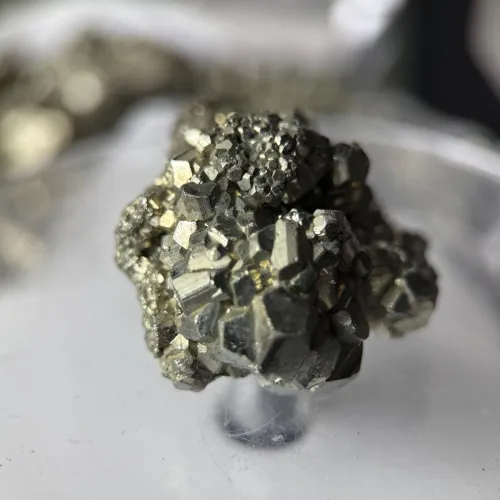
For amateur geologists and jewelry makers, oxidized pyrite risks degrading entire display shelves or contaminating other specimens. Consider Emma, a collector who discovered white crust forming beneath specimens years after acquisition. Her story shows why periodic monitoring and environmental control extend beyond display aesthetics – they preserve historical value and scientific integrity.
Protection strategies focus mainly on humidity barriers and strategic positioning. The most effective approaches center on isolating vulnerable pieces while controlling surrounding conditions:
When changes appear, lightly brushing surfaces with soft sable brushes often removes superficial residues without chemicals. For specimens with secondary minerals, isolation prevents mineral residue transfer – a tactic preserving entire collections despite localized deterioration.
In architecture and infrastructure, pyrite issues typically manifest through "concrete heave" – pressure building beneath slabs as minerals expand during reaction. Modern screenings prevent worst-case scenarios, but historic buildings might reveal problems only through telltale shifts and cracks. Observational methods allow early intervention before structural repairs become necessary.
Suspect reactions in construction materials when noticing these patterns:
Preventative approaches include screening aggregates through sulfate testing and installing vapor barriers beneath slabs where moisture intrusion occurs. Modern construction standards in regions with pyrite-rich geology generally enforce these protective measures.
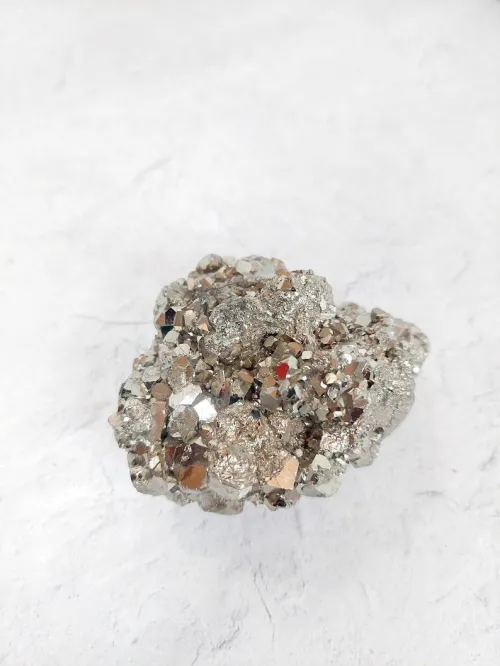
Where pyrite oxidizes en masse at abandoned mining locations, the resulting acid drainage creates ecological hurdles. Observers near affected waters might note orange-stained stream beds or pH imbalances affecting biodiversity. Practical management revolves around containment and active pH modulation.
Containment approaches often involve covering exposed waste rock piles and isolating drainage channels through sedimentation ponds. Water treatments use controlled limestone additions, which gradually neutralize acidity. Such solutions don't stop pyrite oxidation entirely, but they buffer ecosystems against drastic pH changes over extended areas.
The mineral's "fool's gold" nickname hints at its historic confusion with precious metal. When tarnishing obscures surfaces, identification challenges become more complicated. Authentication techniques employ both characteristic physical properties and reaction behaviors that distinguish pyrite from similar minerals or man-made replicas.
Examine specimens using these verification methods:
For potentially oxidized jewelry, inspect clasps and hidden settings where discoloration appears first. Though surface changes sometimes reduce collector appeal, they typically don't affect mineral authenticity when characteristic structures remain visible under magnification.
Working with this temperamental mineral needn't become a frustrating battle against chemistry. By recalling three key principles during evaluations, you might extend specimen longevity and recognize concerns early:
First, prioritize moisture management above all – environmental control fundamentally regulates reaction speeds.
Second, make visual inspections habitual when humidity fluctuations occur. Notice texture changes before they become structural issues.
Finally, segment problems spatially: storage solutions for collectors differ vastly from construction techniques, though both target the same chemical process. Documenting changes periodically often reveals progression patterns unique to specific settings.
Q: What color changes indicate pyrite oxidation?
A: Metallic yellow typically shifts toward brownish-gray hues, sometimes with accompanying rust-colored staining or efflorescent yellow-white crystal crust formation.
Q: Can oxidized pyrite affect building foundations?
A: When pyrite-containing aggregate is used beneath concrete slabs, swelling reaction products might cause heaving and cracks over time. New construction guidelines typically screen materials to prevent this issue.
Q: How to distinguish pyrite from gold despite oxidation?
A: Examine streak, hardness and structure: Gold streaks yellow, forms nuggets, and remains malleable. Pyrite streaks greenish-black, forms cubic crystals, and fractures rather than bends when pressured.
Q: Does pyrite oxidation harm aquatic ecosystems?
A: Acid drainage from oxidation may lower pH in surrounding waters, potentially harming organisms. Mining operations may use barriers and buffers to prevent downstream issues.


$
