Pyrite possesses true metallic properties due to its crystalline structure and electrical conductivity. Unlike nonmetallic minerals, it exhibits metallic luster and can complete electrical circuits. However, tarnished specimens may appear less metallic over time depending on their environmental exposure.
Picture standing where prospectors once scrambled, spotting a sun-glinting fragment in a riverbed. Your pulse quickens – could this brassy cube with razor-sharp edges be gold? Mineral enthusiasts face this exact moment of uncertainty with pyrite, commonly dubbed "fool's gold." Beyond romantic deception lies a genuinely fascinating mineral puzzle: How do we decode pyrite's metallic truth from nonmetallic posers? Together we'll unravel atomic structures that govern light reflection, conduct electricity through sulfide crystals, and transform under geological pressure. You'll learn to spot tarnishing patterns and electrical responses that reveal fundamental differences from gold or quartz, even without lab equipment. This understanding goes beyond identification – it unlocks pyrite's hidden roles in geology, electronics, and Earth's unseen chemical cycles.
How atomic bonding creates metallic surfaces
Crystal geometry's role in light reflection
Practical field tests versus look-alikes
Industrial uses influenced by conductivity
Collector evaluation criteria
When distinguishing mineral types, you'll encounter a crucial crossroads: Does this substance behave like metal or not? For pyrite identification, this difference manifests where crystallography intersects with physics. Atomic bonding dictates whether electrons move freely (metallic) or stay bound in place (nonmetallic), affecting both appearance and practical applications across diverse contexts.
Pyrite's metallic character primarily stems from its iron sulfide composition creating what mineralogists call a "cubic system." Imagine atoms locking into geometric grids with shared electrons – this enables light to bounce off facets with mirror-like reflection instead of scattering diffusely. Tarnished surfaces may confuse observers as they form iridescent oxide layers altering light interaction. Through high-magnification inspection, you might notice subtle triangular growth patterns called millerite that confirm pyrite's crystalline identity during examinations.
Observe how illumination interacts with crystal faces. Metallic minerals typically throw intense specular reflections resembling liquid mercury, while nonmetallic specimens display softer, milkier luminosity. Variations occur when environmental decomposition creates microscopic pits on pyrite's surface, but internal fractures maintain darker metallic gray tones.
Using simple circuit testers reveals pyrite's conductive properties. Unoxidized sections typically complete electrical connections through their structure, whereas nonmetallic minerals interrupt current flow. This characteristic historically enabled pyrite's use in firearms ignition systems where friction generated visible sparks unavailable in less conductive minerals.
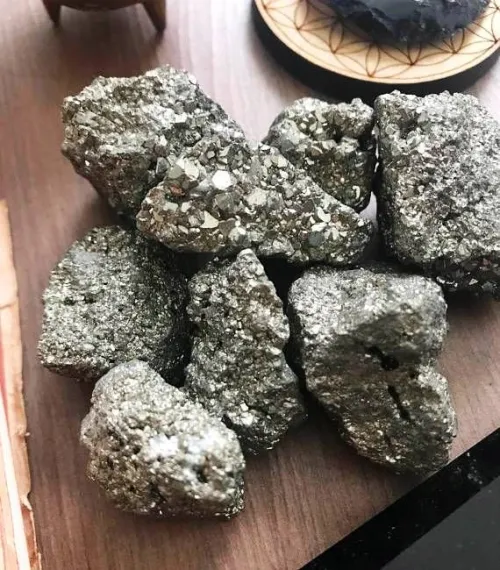
Among mineral identification challenges, even trained eyes grapple with pyrite versus gold or chalcopyrite discrimination under variable lighting. These visual ambiguities matter because misinterpretations can misdirect exploration investments or prevent recognizing scientifically significant formations. Systematic observation becomes your strategic ally in detecting the metallic signature hiding within apparent resemblances.
Distinctive tarnishing patterns offer reliable differentiation cues that evolve through mineral life cycles. You'll notice naturally aged pyrite developing rainbow oxidation hues or reddish rust spots absent in gold, while freshly cleaved surfaces exhibit brighter brassy tones than chalcopyrite's tarnished bronze. During streak testing, pyrite's greenish-black residue on unglazed porcelain contrasts sharply with nonmetallic minerals' pale powdery trails. Subtle weight differences provide additional clues – pyrite feels substantially heavier than most nonmetallic minerals yet lighter than comparable-sized hematite given its distinct atomic packing.
Detect sulfur presence through faint sulfuric odors released when scratching weathered specimens. This signals decomposition where moisture and oxygen transform iron sulfides into rust-colored oxides and mildly acidic runoff. Though this process compromises metallic sheen over decades, microscopic examination typically reveals intact crystalline structure beneath degradation layers.
Notice characteristic 90-degree angles between cubic pyrite faces, often featuring etched parallel striations. These precise geometric signatures result from sulfur-rich growth environments unavailable to nonmetallic mineral formations. Chalcopyrite occasionally mimics these patterns but develops characteristically blockier formations with deeper tarnish.
Earth transforms pyrite's metallic essence across varied geological theatres where formation environments imprint telltale features. Recognizing origin contexts matters because volcanic-born pyrite develops different electrical responses than sedimentary-formed counterparts, influencing collector assessment and scientific interpretation alike. You'll discover how extreme pressures and temperatures bake electrical conductivity into crystals during formation, with environments ranging from sulfur-belching hydrothermal vents to methanogenic marine sediments.
Pyritohedral crystallization tends to occur where superheated fluids surge through fractured bedrock, creating the characteristic cubic geometries that generate metallic luster. Imagine mineral-rich brines depositing atomic structures in pressurized pockets – these specimens typically maintain sharp electron mobility despite surface weathering. Sedimentary pyrite forms through bacterial reduction in oxygen-poor muds often showing spheroidal aggregates rather than defined cubes. Under magnification, these display microcrystalline compositions altering both current conduction tendencies and facet reflectivity compared to igneous specimens.
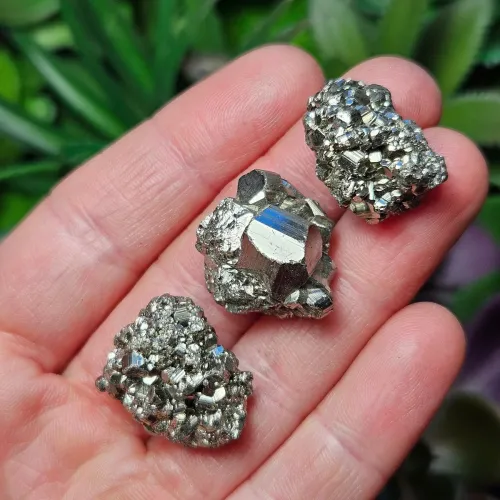
Practical verification techniques prevent costly misidentification during mineral expeditions where complex geology obscures pyrite's true properties. Rather than complex equipment, you'll employ sequential observational protocols that reliably distinguish metallic behavior across varied conditions. These approaches matter because surface weathering sometimes mimics nonmetallic traits without altering core mineral truth.
Begin visual inspection under natural light noting reflection intensity and decay patterns. High-quality pyrite displays mirror-like surfaces when freshly broken, though tarnished layers gradually attenuate reflectivity over time. Advance to streak testing using unglazed ceramic plates – the distinctive dark gray-green residue contrasts with metallic gold's yellow residue and hematite's reddish streaks. Density checks via water displacement reveal pyrite's medium weight signature compared to heavier hematite and lighter resin imitations. Finally, conductivity tests complete the protocol by confirming electron mobility where oxidized layers haven't compromised underlying metallic characteristics.
Under raking light, parallel growth striations become visible indicators differentiating genuine pyrite from look-alikes like marcasite. Notice how pyrite's striations appear shallower and more geometrically arranged than marcasite's chaotic fractures or cubic iron pyrite. These features require adequate lighting adjustment during field examination.
Start with surface texture – authentic pyrite maintains consistent crystalline structure between cleavage points Assess cleavage patterns – 90-degree angles characterize iron sulfide formation unlike amorphous fakes Verify density signatures – natural specimens demonstrate uniform heaviness throughout
Forget notions of pyrite as mere mineralogical curiosity – its functional properties energize diverse technological applications wherever metallic properties become economically advantageous. These capabilities originate from its unique crystalline conductivity and sulfur-rich composition unavailable in nonmetallic counterparts. Real-world deployment occurs where high-temperature environments or corrosive industrial processes demand pyrite's specific reactivity profile.
Historically harnessed in firearms for spark generation due to its shock-triggered pyrophoric nature, pyrite now primarily contributes to industrial chemistry. Sulfuric acid production leverages its decomposition when catalyzed through specialized heat chambers. Experimental electronics research explores pyrite's photoresponsive properties in thin-film solar applications. Lithium-sulfur battery development frequently employs synthesized analogs to improve electron transport efficiency. These implementations underscore how metallic traits transcend visual appearance to enable functionality.
Beyond scientific intrigue, pyrite's valuation in mineral markets depends profoundly on discerning authentic metallic specimens from less valuable look-alikes. Collectors develop judgment skills recognizing how subtle visual cues correspond to both geological history and current physical properties. These distinctions determine whether specimens command premium prices or remain geological novelties with limited collector appeal.
Evaluation prioritizes crystallographic integrity as distorted cubic formations indicate less stable crystals with compromised metallic characteristics. Notice surface preservation quality since intensive weathering compromises aesthetic value. Size becomes secondary to perfection, as small intact cubes generally interest collectors more than large amorphous masses. Rare formation environments like pyritohedral crystal groups often justify value premiums. Finally, assessment weighs conductivity potential – higher-conductivity specimens tend to exhibit superior optical characteristics supporting collector valuation.
After our mineral odyssey, consider carrying these portable principles during geological encounters. First practice distinguishing reflection types: metallic minerals behave like tiny mirrors while nonmetallic counterparts soften illumination. Next remember streak testing's clarity – that charcoal-gray trail reveals pyrite's signature. Finally, embrace patience allowing environmental context interpretation before concluding nature's metallic marvels. Understanding how crystalline architecture generates these properties transforms identification from memorized steps into perceptive observation where atomic physics and geology intersect.
Does 'fool's gold' contain actual metal? Pyrite contains iron within its iron disulfide composition, forming crystals with metallic properties despite lacking gold content.
Visual distinctions between pyrite vs chalcopyrite? Pyrite generally appears brighter brassy-yellow while chalcopyrite develops deeper bronze tones; their differing sulfur ratios also create distinct streak-test results on dark substrates.
How do geologists classify pyrite? Mineralogy identifies pyrite as a metallic mineral due to its crystallographic structure enabling electricity conduction and optical reflectivity unlike nonmetallic minerals.
Why did historical weapons use pyrite? Pyrite produces visible sparks when struck against flint due to its piezoelectric properties unavailable in non-conductive materials.
Can pyrite lose metallic qualities? Surface oxidation may reduce reflectivity over time, although core crystalline formations maintain metallic composition unless destroyed by extreme weathering.


$
