Preserving pyrite requires humidity below 50%, temperature stability from 16-22°C (60-72°F), and ultraviolet-resistant barriers to prevent oxidation. Recognizing early signs like surface powder or reduced luster helps implement timely interventions, especially for specimens with micro-fractures. Tailoring environments to your room conditions and pyrite types significantly reduces decay risks.
Picture discovering faint crystalline dust beneath what once gleamed like fool's gold in your curio cabinet. Many collectors face this heartbreak when unprotected pyrite transforms into powdery residue through oxidation. Whether you're safeguarding geological souvenirs or investment pieces, this guide translates mineralogy into actionable home care. We'll navigate humidity thresholds, room-specific microclimates under your roof, and personalized monitoring cues so your specimens remain as enduring as the earth that formed them.
When Janet noticed yellow-streaked cubes developing white crusts on her bookshelf – despite "low humidity" assurances – she learned how subtly unstable environments trigger chemical reactions. This fundamental truth powers preservation: pyrite oxidizes upon contact with moisture-laden air, gradually converting iron sulfide into destructive sulfuric acid and iron oxides through cumulative molecular changes.
Optimal conditions involve stable temperatures (16-22°C/60-72°F) with relative humidity strictly under 50%, creating an environment where moisture-dependent reactions slow dramatically. Specimens with existing fractures or hollow structures become chemical reaction accelerants – imperfections focus decay pathways almost like lightning rods.
Storage outcomes vary surprisingly between your living room and basement because microenvironments govern mineral stability. Let's translate geological risks into tangible room evaluations.
While avoiding basement perils, sunlit display areas may have concealed threats. Indirect LED lighting minimizes thermal shock versus halogens – but temperature shifts near windows during day/night cycles can trigger invisible condensation events that initiate oxidation. Consistent positioning away from vents and fluctuating light sources helps maintain equilibrium. Glass cabinets must have UV-resistant coating; occasional fogging inside suggests seal compromises.
Typically stable zones become vulnerable near en-suite bathrooms or during seasonal changes. Silica gel packets prove indispensable here, particularly near collections. Remember that they lose one-third effectiveness after absorbing 30% moisture weight – scheduled quarterly rotations using color-changing indicators prevent false security. Avoid placing specimens atop wooden surfaces releasing acidic vapors; acrylic barriers provide physical separation.
In flood-prone zones, this high-risk environment requires defense-in-depth strategies. Hydrometer measurements should occur across multiple weekly timelines before committing specimens. Elevated shelving provides minimal protection, while sealed containers with oxygen absorbers add crucial barriers against subterranean moisture creep. Pyrite density matters profoundly here – dense aggregates withstand variability better than delicate clusters.
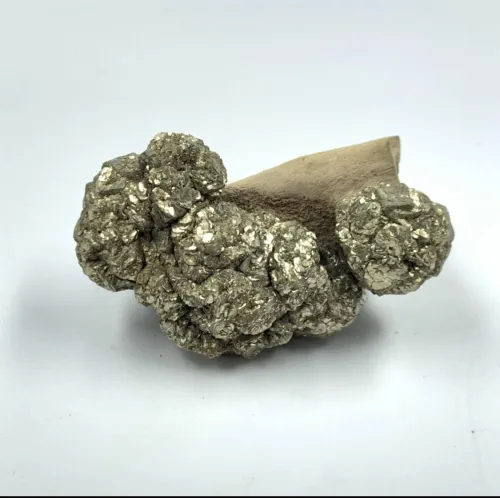
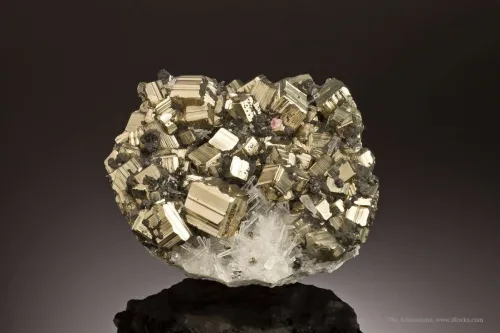
Crystalline form and origin significantly influence preservation requirements. Peruvian pyrite clusters with intricate geometries tend towards higher vulnerability due to greater surface exposure and internal tension points versus solid Spanish cubes.
When humidity control remains challenging, focus preservation energy solid masses with limited micro-fractures visible under magnification. Remember that crystal habits behave differently: intergrown cubes release weathering compounds along shared planes faster than isolated octahedrons. Acid-free tissue cushioning proves essential for traveling specimens or during household vibrations – pyrite’s 6-6.5 Mohs hardness offers deceptive toughness since internal stress invites conchoidal fractures.
Early detection transforms potential losses into manageable corrections. Build these observational habits like checking smoke detectors:
Crystalline Dust Test: Every three months, direct soft light across edges; white powder emerging signals nascent acid formation requiring immediate humidity intervention.
Luster Benchmarking: Compare current reflectivity against dated photos – subtle matte patches tend to indicate surface oxidation advancement.
Structural Integrity Checks: Gentle brush-tapping reveals crumbling unseen to the naked eye, a sign of advanced skeletal instability requiring isolation.
Sensory Alerts: Musty rotten-egg scents upon opening displays call for ventilation plus desiccant replacement – those sulfuric molecules won't wait.
Place that hygrometer near potential problem zones this weekend – baseline data illuminates invisible risks hiding in plain sight. Schedule quarterly mineral ‘health checks’ using our four-field inspection above, rotating desiccants simultaneously. Remember specimen hierarchy: solid masses endure variability better than fragile geometries requiring museum-level control. Your attentive eye becomes pyrite’s strongest ally against time’s chemistry.
Q: At what humidity does deterioration become unavoidable?
Above 60% relative humidity tends to initiate oxidation chains; sustained exposure over months may create irreversible sulfuric acid damage even in otherwise stable specimens.
Q: Can pyrite be displayed alongside calcite without risk?
Caution is required – calcite’s calcium carbonate reacts with pyrite’s acidic oxidation byproducts, potentially damaging both minerals long-term through secondary chemical processes.
Q: Why does my specimen produce glittery particles?
Surface disintegration typically creates powdered residue rather than reflective particles; glittery material may suggest external contaminants or altogether different minerals.
Q: Is direct sunlight exposure worse than humidity for preservation?
Thermal fluctuations from light often exacerbate humidity issues – their combined impact creates greater risks than either factor alone.
Q: Can pyrite be cleaned with water safely?
Water introduces moisture into micro-fractures risking hidden oxidation; dry brushing methods prove considerably safer for maintenance cleaning purposes.


$
