Pyrite, nicknamed Fool’s Gold for its metallic yellow sheen, doesn’t qualify as a gemstone due to inadequate hardness and susceptibility to oxidation. While occasionally used in jewelry, it lacks the durability, rarity enhancement treatments, and grading standards required for official gem classification according to geological authorities. Its instability in daily wear and industrial material value further separate it from precious stones in both scientific and commercial contexts.
You're browsing an artisan jewelry booth when a necklace catches your eye – golden cubes glinting like miniature treasure. “Pyrite!” the seller beams. Yet over coffee the following week, a gemologist friend frowns at its cloudy surface: “This would never survive as a ring stone.” Standing between these perspectives leaves you wondering what invisible rules determine whether a dazzling mineral deserves the term “gem.” This article untangles those criteria through mineral science, durability experiments, and jewelry-making realities. We’ll dissect why pyrite inhabits museum displays more often than engagement rings, investigate why jewelry settings matter crucially for this crystal, and help you recognize when that gleaming pyrite pendant becomes a reasonable choice despite its technical classification.
Gemstone classification fundamentals
Decoding pyrite's mineral properties
Practical jewelry applications and limits
Geologic versus commercial priorities
Selecting and caring for pyrite pieces
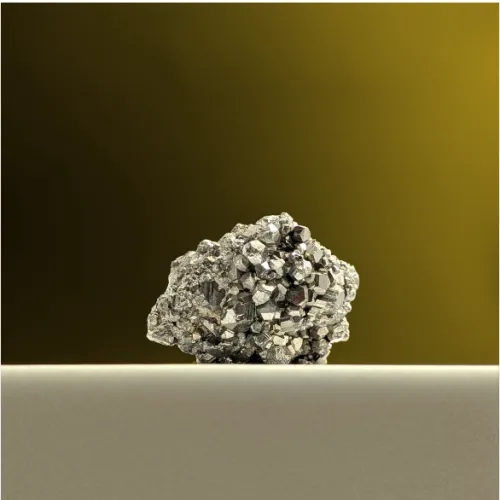
You’d logically call any beautiful mineral set in jewelry a gemstone – after all, it’s literally a gem in a stone setting. But professional gemology relies on measurable parameters separating collectible crystals from commercial-grade jewels. As mineral collectors increasingly explore jewelry possibilities with unique specimens, understanding these boundaries becomes essential. The disconnect often surfaces at jewelry appraisal counters where stunning pyrite cubic crystals face valuation closer to industrial minerals than sapphires.
Formal classification systems evaluate beauty through light performance and color consistency while demanding sufficient durability via hardness tests like Mohs scale rankings. Crucially, rarity plays a dominant role – gemstones need limited sources ensuring exclusivity, whereas pyrite forms abundantly across continents. Unlike commercially graded stones subject to universal quality codes, pyrite lacks standardized clarity measurements and enhancement documentation, making quality comparisons unrealistic. These invisible frameworks explain why jewelers might admire pyrite crystals as mineral exhibits yet hesitate creating high-exposure ring designs.
To anticipate pyrite’s jewelry potential, we must move beyond surface brilliance into atomic construction. Each gleaming pyritohedron crystal demonstrates cubic symmetry so mathematically precise that pyrite became mineralogy’s textbook crystal structure model. However, this structural perfection falters when confronting daily jewelry pressures. Imagine your pyrite pendant scraping against quartz crystals in a mineral drawer – those microscopic impacts gradually compromise its sharp reflective geometries.
Sulfur atoms within pyrite create vulnerabilities absent in silicate gemstones. Notice the characteristic metallic ring when you gently tap pyrite against a quartz point – that dull brass-like clink confirms its metallic composition rather than crystalline rigidity. When selecting pieces, prioritize protective bezel settings surrounding corners where friction concentrates during movement. Surface oxidation presents another challenge; moisture contact risks yellow crusting that dulls metallic reflection over months. These reactions manifest visibly through tiny craters appearing on high-contact facets and edges after minimal wear.
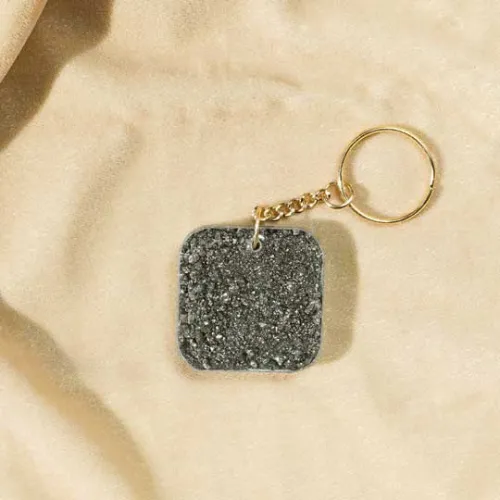
The nickname “Fool’s Gold” created enduring marketplace misunderstandings regarding pyrite’s fundamental properties. Some sellers exploit this legacy, leading buyers toward unrealistic expectations about mineral stability and value retention. Three persistent myths particularly warrant correction given their impact on purchasing decisions.
Myth: Pyrite should wear like quartz since they appear similarly solid. Hold your pyrite specimen beside a quartz crystal and test with quartz’s sharp corner – pyrite typically shows visible abrasions after gentle friction. Its lower Mohs rating creates substantially higher daily vulnerability. Unlike quartz’s predictable structural integrity, pyrite responds to impact with cleavage fractures along chemical planes that compromise integrity.
Myth: Pyrite naturally contains recoverable gold. Trace gold inclusions occasionally occur at microscopic levels, never approaching economic viability. Check authentication carefully since marcasite (another metallic mineral) often appears mislabeled as pyrite in cheaper jewelry. Authentic pyrite’s industrial applications focus overwhelmingly on sulfur extraction and battery component production rather than precious metals.
Myth: Oxidization equals lower quality. Surface tarnish reflects pyrite’s geological chemistry rather than craftsmanship defects. Regular gentle cleaning helps but cannot overcome inherent tendencies. This stability reality separates it fundamentally from gemstones designed for generational wear.
So where does pyrite genuinely shine within jewelry parameters? Seek designs acknowledging its material truths through construction workarounds. Consider exhibition pendants as top candidates – protected settings shield crystal exposure while vertical orientation minimizes friction risks. Compare against ring designs where finger exposure accumulates invisible daily damage through desk bumps, bag zippers, and door handles.
Specialized settings become pyrite’s critical partners. Full bezels wrapping crystal edges defend vulnerable geometries better than simple prongs. Seek pieces positioning crystal faces parallel to surfaces rather than protruding outward. Inspect mounts for epoxy residue potentially hiding fractures or stability compromises – pyrite’s brittleness necessitates honest structural support. For piercings, reconsider entirely; pyrite’s metallic composition risks oxidation reactions when subjected to prolonged skin moisture and body chemistry fluctuations in earrings or navel pieces.
Jewelers classify specimens primarily through their functionality benchmarks whereas mineralogists prioritize crystallization perfection, creating divergent pyrite relationships. Museums frequently exhibit extraordinary pyritized fossils or geometric crystallizations while gemstone galleries display cut gems reflecting strategic brilliance optimization. Pyrite straddles these worlds without wholly satisfying either criteria.
Mineralogy values pyrite’s role illustrating crystal formation processes and recording prehistoric environments. Large natural clusters might command high prices among collectors prioritizing museum-grade crystallization aesthetics. Once moved into jewelry supply chains, pyrite faces durability tests exceeding display-case life where subtle yellowing diminishes perceived quality. While mineral enthusiasts might treasure oxidation patterns as natural histories, jewelry consumers typically equate surface changes with premature degradation. This context gap explains valuation inconsistencies between mineral markets and fine jewelry appraisal contexts.
Approach pyrite jewelry with modified parameters balancing enjoyment against inherent limitations. When purchasing, inspect settings for structural reinforcements concentrating on edge and corner coverage since fractures initiate from unsecured geometries. Prioritize pendants whose orientation keeps crystals relatively protected while reserving bold ring designs for occasional-wear pieces.
Establish realistic cleaning methods Gently polish with microfiber cloths instead of solvent dips which risk seeping into microscopic fissures. Store separately avoiding stone-to-stone contact that accelerates micro-scratches on crystalline planes.
Prepare for aesthetic shifts Monitor for gradual surface clouding replacing initial metallic reflections – view transitions as natural mineral processes rather than care failures.
Reinforce protective designs Consider periodic professional re-setting in robust mounts as prongs weaken over seasons.
Manage expectations Acknowledge its lower second-market valuations compared with traditional gems when considering future reselling or inheritance.
Approach pyrite as intriguing mineral jewelry distinct from conventional gem pieces. Start by prioritizing occasional-wear pendant designs that maximize enjoyment while minimizing environmental exposure. When selecting, check setting depth and protective encasement quality around vulnerable crystal edges. Remember, beautiful mineral and durable gem occupy distinct territories – appreciation requires acknowledging both realities simultaneously. With these insights, your relationship shifts toward celebrating pyrite’s genuine strengths without demanding impossible endurance from something fundamentally geological over ornamental.
Why lack gem classification despite beauty?
Pyrite frequently falls below commercial jewelry durability requirements due to oxidation tendencies, structural brittleness, and excessive global abundance.
Does authentic pyrite contain gold?
Trace microscopic gold inclusions occasionally occur naturally without approaching profitable extraction quantities or modifying fundamental properties.
Where geographically do pyrites occur?
Deposits span globally including significant formations across Spain's pyrite belts, North America's volcanic regions, and Peru's metal-rich highlands.


$
