Pyrite has held diverse meanings throughout human history, from Inca spiritual mirrors to Victorian mourning jewelry. Its cubic formations often represented prosperity or cosmic connections across cultures, while geological properties like iridescent tarnishing revealed distinctive identification markers for modern collectors.
Imagine holding a palm-sized pyrite cube that once reflected moonlight in an Andean shaman’s ritual. Around you, museum visitors puzzle over mineral displays wondering why this "fool’s gold" captivated civilizations worldwide. You’re seeking authentic insights beyond glossy brochures—desiring historical contexts for artifacts, trustworthy identification cues, and cultural narratives untangled from modern myths. We’ll unravel pyrite’s journey through ancient temples, industrial mines, and contemporary collections, equipping you to appreciate its multifaceted legacy through geological detective work.
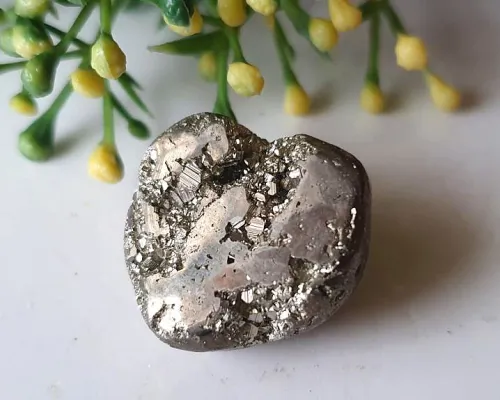
Exploring pre-Columbian ritual applications of metallic stones
Analyzing how mineral science reshaped miners' superstitions
Decoding symbolism in Victorian grief traditions
Verifying authenticity in cultural artifacts today
When handling suspected ceremonial objects, you may question how indigenous cultures utilized metallic stones. Understanding ceremonial contexts helps identify authentic pieces beyond surface appearance. Pyrite’s mirror-like surfaces held divine significance—such as Inca priests using polished sheets for celestial divination before Spanish contact. These artifacts typically show distinct weathering patterns like pinkish oxidation edges from centuries underground. Natural Jaspilite formations incorporating pyrite with red jasper might display:
Notice faint chromatic shifts along exposed ridges, signaling prolonged burial in varying soil pH levels. Rainbow-like sheen tends to appear in direct sunlight due to atmospheric exposure altering mineral composition over time.
Inspect crystal clusters with angled light for hollow chambers—natural voids suggesting rapid volcanic formation rather than modern carving. Well-defined cubic geometry remains visible even in fragments of ceremonial objects.
You might discover "luck stones" in antique mining gear, prompting curiosity about why prospectors carried pyrite despite its nickname. Nineteenth-century miners treasured pyrite nodules as tangible optimism symbols because its presence indicated possible gold veins nearby. These personal talismans typically exhibit conchoidal fracturing at edges from pocket wear. Yet scientific developments altered perceptions of value:
Geologists documented pyrite contained within quartz formations as markers for gold deposits through crystallization patterns still used in modern surveying. Mineralogists discovered measurable physical differences including magnetic properties distinct from actual gold, plus sulfur signatures detectable through acidic reactions.
For collectors evaluating mourning jewelry, recognizing era-specific craftsmanship prevents misattribution. Pyrite functioned metaphorically during the Victorian mourning period as ‘Earth’s tears’—becoming a tactile symbol of loss when incorporated into lockets or brooches. Authentic pieces generally retain slight surface oxidation from prolonged skin contact with protective bevel settings that preserve brittle crystal formations. Metalworkers deliberately chose specimens with:
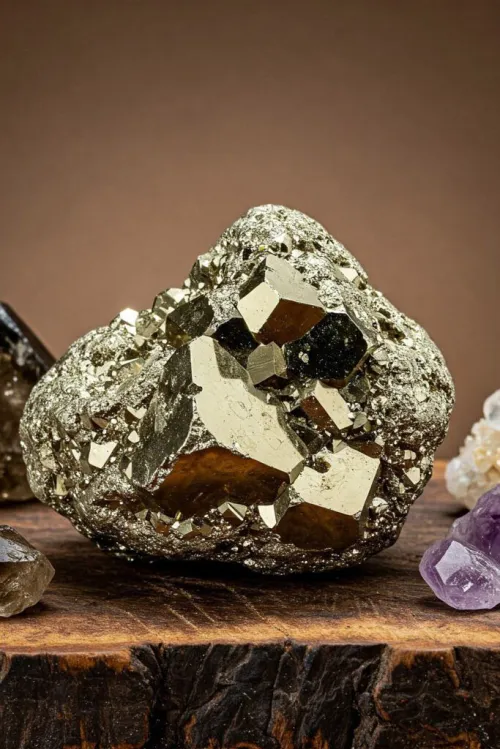
These mineralogical features carried cultural narratives that can still be observed under low magnification in undamaged pieces today.
When assessing objects with alleged cultural provenance, you can reconcile historical records with physical traces. Distinguish between genuine artifacts and modern recreations through cross-verification strategies:
Examine striation patterns under magnification: naturally formed geometric lines appear consistent rather than artificial uniformity. Consider testing electrical conductivity—pyrite’s low resistance differs from resin replicas.
Prioritize specimens with documented origins from historically significant regions like Peru or Spain. Verify whether symbolic elements correspond to cultural interpretations—Chinese wealth motifs feature clustered crystals unlike Celtic solar emblems.
UV light exposure can reveal contemporary glues in reassembled objects; acid tests confirm sulfur content through characteristic reaction odors. For ceremonial items like spiritual mirrors, incongruous carving tool marks may indicate post-discovery modifications.
Keep these principles in mind during your explorations: inspect specimen edges for geometric integrity before cultural assessment, seek original settings that preserved structural completeness for historical artifacts, and document environmental conditions to monitor sulfur stability over time. These observational practices cultivate deeper appreciation beyond surface-level attractions.
Q: Why does antique pyrite jewelry develop color changes?
A: Metallic components may oxidize gradually upon extended exposure to humidity, resulting in subtle rust-brown patinas observable in Victorian-era pieces.
Q: How can volcanic pyrite differ from modern synthetic versions?
A: Natural specimens typically contain trace mineral striations and uneven spectral reflections less visible in industrially produced alternatives.
Q: Why would authentic pre-Columbian objects have hollow crystals?
A: Rapid crystallization near geothermal vents can capture gas pockets, creating cavities observable with internal illumination.


$
